

“Search engines don’t just read your content anymore; they UNDERSTAND IT”. That’s why Python-driven NLP has become a game-changer for anyone serious about SEO. With the right tools like spaCy, NLTK, and Transformers, you can break down your content the same way search engines do by identifying things, including:
The result? Smarter content decisions, stronger rankings, and pages that match what users actually want. Imagine working in a digital environment filled with semantic graphs, embeddings, and Python-powered insights that visually map how meaning flows through your content.
This article explores how Python NLP helps you decode user intent, structure content more intelligently, and build SEO strategies that outperform traditional keyword-based approaches.
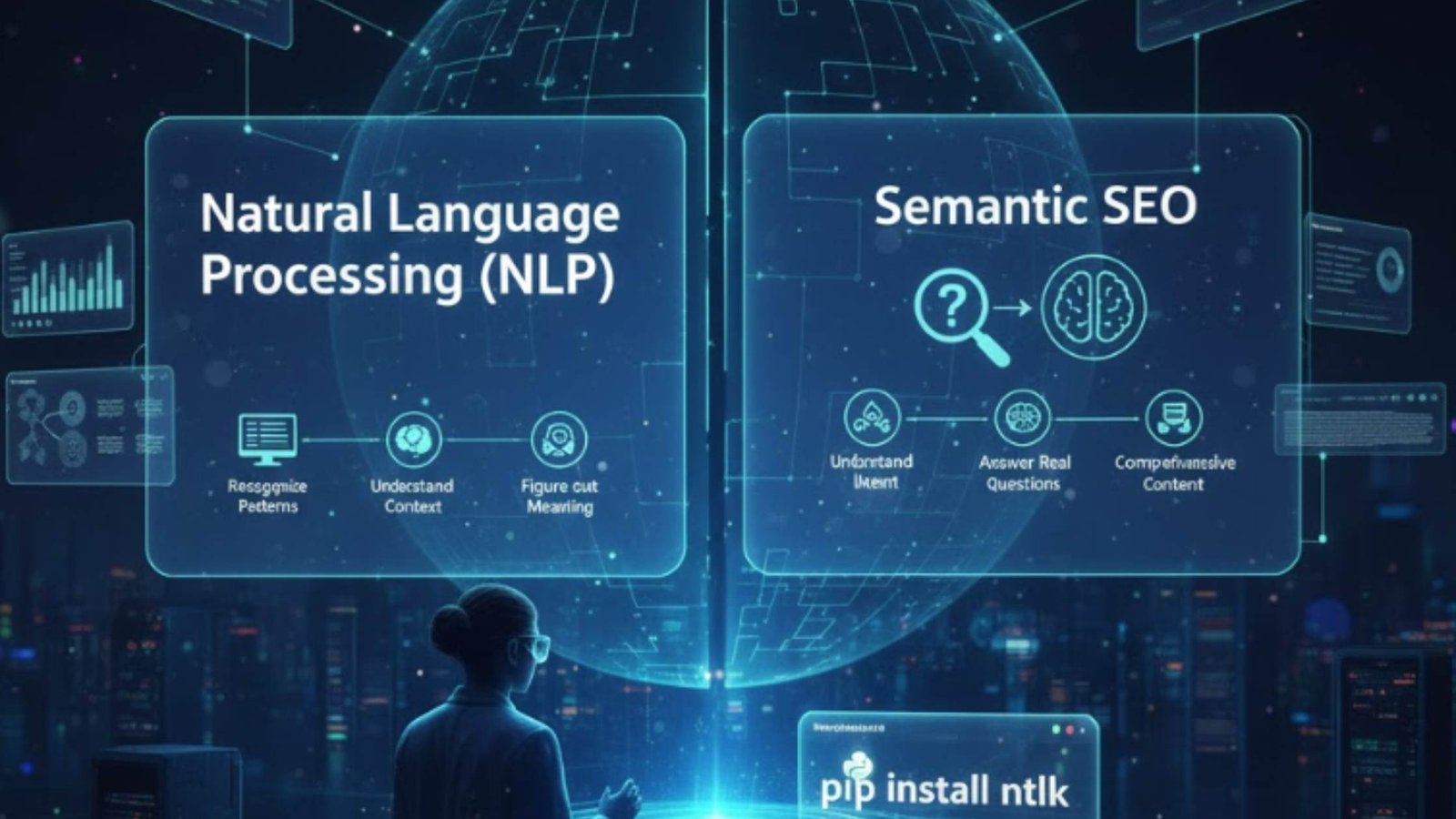
Before using Python for any NLP tasks, it helps to understand the basics. Natural Language Processing (NLP) is a part of artificial intelligence that teaches computers how to read and understand human language. It allows machines to recognize patterns in text, understand context, and even figure out the meaning behind words—similar to how people do.
Semantic SEO builds on this idea. Instead of focusing only on keywords, semantic SEO looks at what a user actually means when they search. It’s about understanding intent, answering real questions, and providing content that covers a topic in a complete and meaningful way. This modern approach helps search engines match users with the most relevant and helpful content, not just pages that repeat keywords.
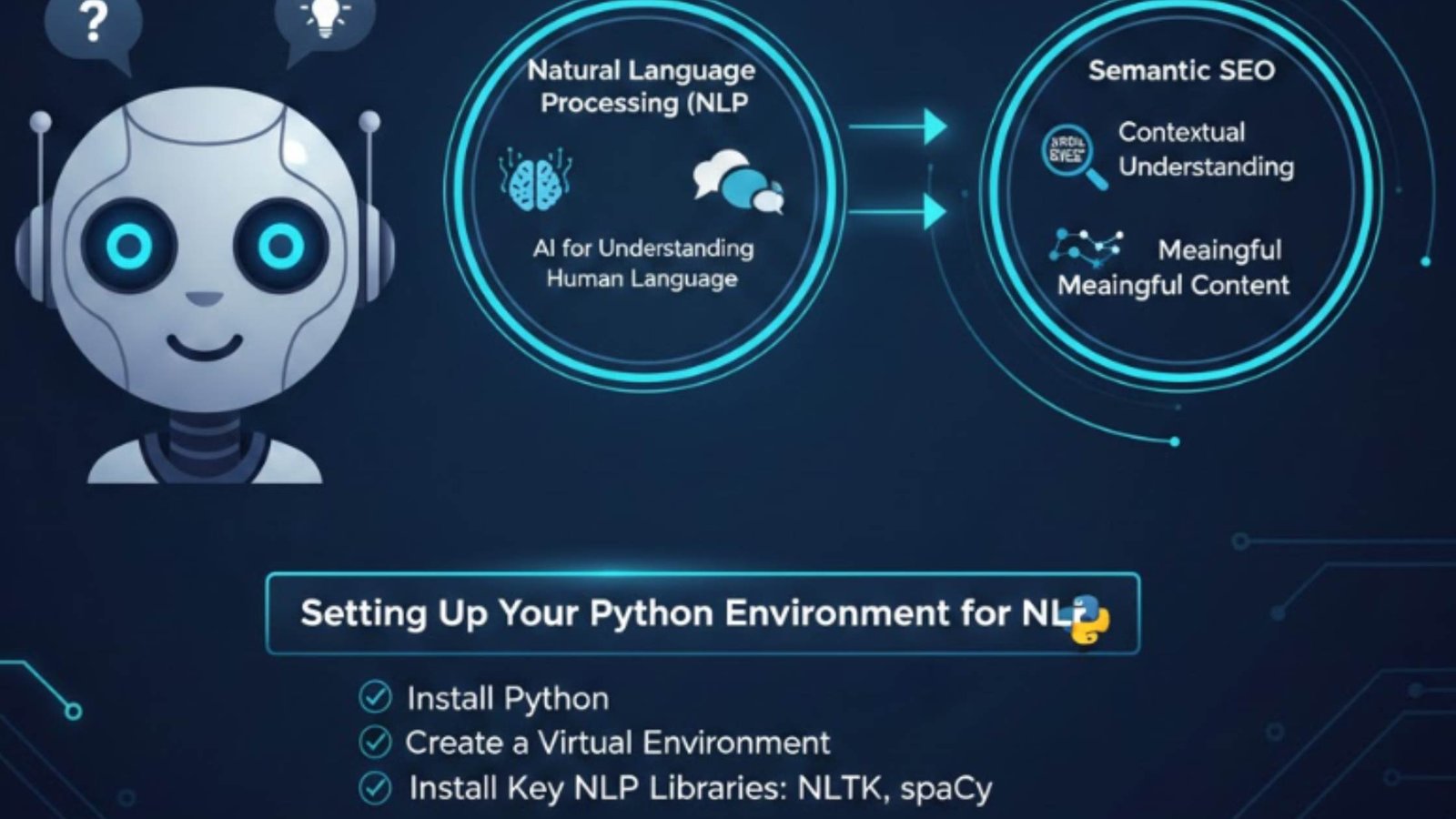
To begin using Python for NLP and semantic SEO, you’ll need to set up a basic working environment. Here’s a simple roadmap:
You can install both libraries using this command: pip install nltk spacy.
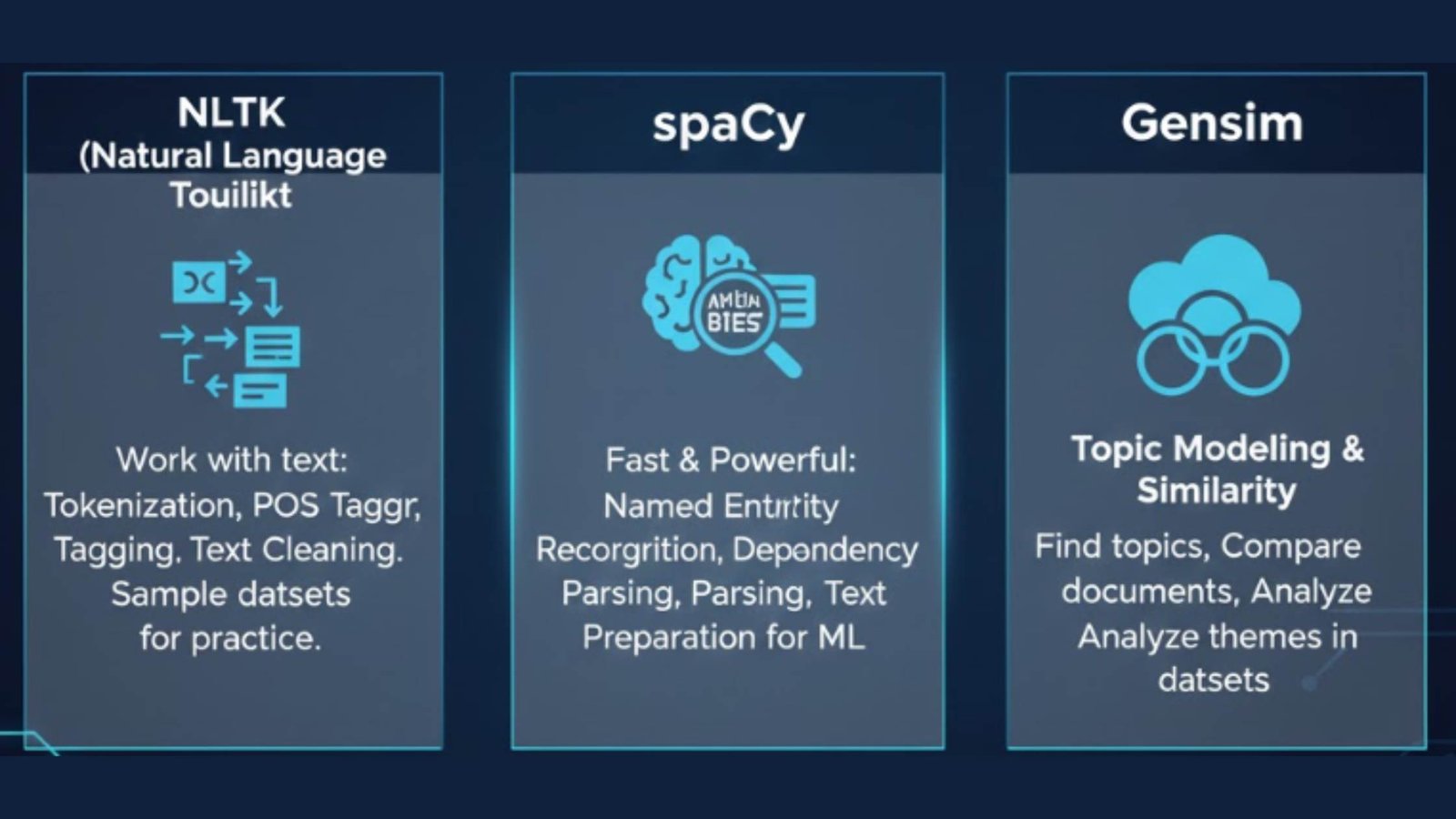
Different Python libraries serve different NLP purposes. Here are the most important ones to know:
NLTK is a popular Python library that helps you work with text. It includes tools to break sentences into words, identify word types, clean text, and analyze language. It also provides many sample datasets for practice and learning.
spaCy is a fast and powerful Python library for NLP. It helps identify entities, analyze sentence structure, and prepare text for machine learning, handling large amounts of data efficiently.
Gensim is a Python library for understanding the meaning in large text collections. It’s great for finding topics, comparing documents, and analyzing themes in big datasets.
To start working with semantic SEO and Python for SEO, you need to prepare your Python environment first. This means installing the necessary tools and setting up your workspace, which will help you use NLP (Natural Language Processing) techniques to improve your content. Here’s how to get started:
You’ll need a few things to make your environment ready:
You can install NLTK and spaCy using pip, which is the tool that helps you download and manage Python libraries.
After installing the software, you’ll need to set up your workspace. This means configuring your code editor or IDE, and adding any necessary plugins or extensions to make coding easier.
Once everything is set up, it’s a good idea to test your environment. You can do this by running a small Python script that uses either NLTK or spaCy to ensure everything is working correctly.
To get started with Python for NLP (Natural Language Processing) and semantic SEO, you need to learn some basic NLP techniques. Python can help you improve your website’s SEO by analyzing and enhancing your content, making it more appealing to search engines.
Some key NLP projects to focus on include text classification, sentiment analysis, and named entity recognition. These will give you a deeper understanding of how Python can be used for NLP and SEO. Tools like NLTK and spaCy are essential for working on these projects.
Here’s a simple process to begin using Python for NLP and semantic SEO:
By following these steps and diving into Python’s NLP libraries and techniques, you’ll build a solid foundation. This will make your NLP tasks more effective and efficient, and ultimately help improve your content’s performance in search engines.
Understanding text processing and analysis is pivotal in the realm of Natural Language Processing (NLP) and semantic SEO. These methodologies allow us to extract meaningful insights from large volumes of text, thus enhancing SEO strategies. By leveraging Python’s capabilities, you can streamline text processing tasks and apply NLP techniques to improve SEO outcomes.
To effectively analyze text, certain NLP techniques are indispensable. These methods help break down complex text data into manageable components, allowing for a deeper understanding of the content and context. Here’s a quick rundown of essential techniques:
Tokenization involves breaking text into smaller units, such as words or sentences. Lemmatization simplifies words by converting them into their base form, which is crucial for reducing complexity in text and ensuring NLP models can work more efficiently.
NER identifies and classifies named entities such as persons, organizations, or locations within text. This technique can reveal critical information that enhances content relevance, improving semantic SEO by aligning with search intent.
Sentiment analysis helps understand the emotional tone behind a piece of text, which can be useful for tailoring content to resonate with the audience’s feelings, thus enhancing engagement.
Creating an NLP pipeline involves selecting the right tools and libraries, implementing essential text processing tasks, and optimizing for performance. Libraries like spaCy and NLTK play a pivotal role in simplifying these processes, enabling you to analyze text efficiently.
To elevate your NLP skills, delving into advanced semantic analysis is essential. Techniques like topic modeling, word embeddings, and content classification allow for more granular analysis of text, enabling you to understand and categorize data more effectively. By mastering these methods, you can gain deeper insights into the meaning of content and improve its search engine performance.
Algorithms like Latent Dirichlet Allocation (LDA) can identify hidden topics in a collection of documents, making it easier to categorize content for SEO optimization.
Techniques like Word2Vec and GloVe map words to vectors, helping NLP models capture semantic relationships between terms, enhancing content relevance.
Using machine learning algorithms to categorize content into specific topics or themes can further refine your SEO strategy by ensuring your content aligns with the right audience intent.
The practical applications of NLP in SEO are diverse, from improving content relevance to enhancing user experience. By incorporating NLP-based SEO strategies, businesses can optimize their websites to rank higher in search results. Here are some areas where Python-powered NLP can be applied:
To effectively use Python in text analysis and SEO, here are some best practices to keep in mind:
While working with NLP for SEO, there are several challenges to be aware of: