
Understanding E-E-A-T and YMYL
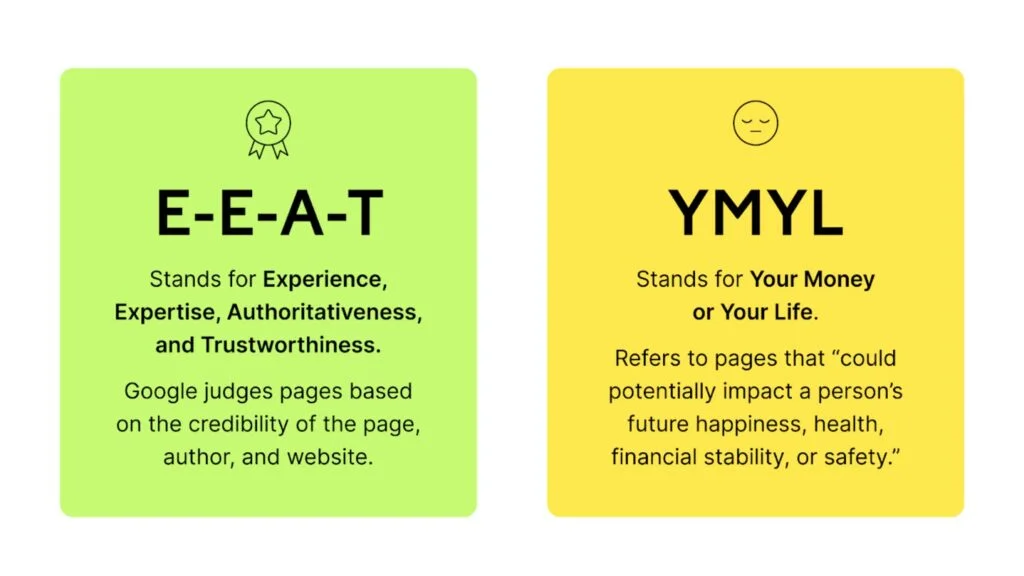
Mastering E-E-A-T and YMYL can significantly elevate your SEO strategy, even if your website isn’t strictly in the “Your Money or Your Life” category. E-E-A-T (Experience, Expertise, Authoritativeness, and Trustworthiness) is a framework Google uses to assess content quality. While YMYL topics, like legal, financial, or medical advice, demand the highest trust standards.
Understanding these concepts helps you create content that both users and search engines value. In this Odyssey Marketing guide, we’ll break down E-E-A-T and YMYL, explore their impact on rankings, and provide actionable steps to boost your law firm’s online visibility.
What is E-E-A-T? You Must Know for SEO & Content Expertise
It’s important to recognize that E-E-A-T doesn’t directly influence search rankings. Rather than being a measurable metric, it serves as a qualitative framework for evaluating content. Google’s Search Quality Rater Guidelines use E-E-A-T to help human evaluators assess how reliable, knowledgeable, and trustworthy a website is.
While these evaluations don’t directly determine rankings, they inform Google’s algorithms, guiding them to prioritize websites that offer the most accurate, helpful, and credible information.
So, what exactly is E-E-A-T, and how can you communicate it effectively on your website?
Experience (First “E”)
The first E stands for Experience, meaning first-hand, real-world knowledge. Google values content created by someone who has actually lived or used what they are writing about. Examples include:
- Travel Blog: A digital nomad blog shares the writer’s personal trips, including photos, videos, and detailed experiences of places actually visited.
- Product Review Site: A site that provides evidence that the reviewer used the product firsthand, showing an authentic evaluation.
- Recipe Blog: A baking blog by a passionate cook, supported by high ratings, comments, and reader feedback.
- Personal Health Blog: A blog like A Balanced Belly documenting personal experiences with Crohn’s disease and diet management.
Showing authentic experience builds credibility and signals to both readers and Google that your content is genuine.
Expertise (Second “E”)
Expertise is about demonstrating knowledge or skill in a particular subject. This can be formal (credentials, degrees, CVs) or informal (personal experience valued by readers). Some examples include:
- Career Insights Blog: A retiree shares knowledge and professional insights gained during their career.
- Research Center Blog: A blog documenting recent research projects and findings in a specialized field.
- Developer Blog: A web developer shares coding projects, tutorials, and public talks to demonstrate technical expertise.
- Informal Expertise: Someone sharing skill-based content that is highly valued by their readers, even without formal credentials.
To highlight your expertise, ask: What are you recognized for? What knowledge can you prove to others that adds value?
Authoritativeness (A)
Authoritativeness measures the credibility of a website or its creator relative to the topic. A site’s authority can vary by subject:
- Medical Authority: A premier cancer center website providing expert guidance on cancer treatments.
- Personal Experience: A patient’s blog providing life experiences that are valuable to readers but not considered medical authority.
Authority often overlaps with experience and expertise, but it emphasizes the perceived reliability of information in a specific field.
Trustworthiness (T)
Trustworthiness is the cornerstone of E-E-A-T. It reflects whether users feel confident relying on your website. Key factors include:
- Secure Checkout: Websites using safe payment methods and protecting sensitive information.
- Transparent Authorship: Clear disclosure about who owns the website and who wrote each article.
- Testimonials & Reviews: Positive feedback from users that reinforces the credibility of the site.
- Contact Information: Providing clear ways to reach the organization or author to build trust.
Think of trustworthiness as the same factors you’d consider before doing business with someone in person—Google applies the same logic to online content.
Why Trust and Expertise Are Essential for YMYL Websites?
E-E-A-T is important for all websites, but it becomes critical for YMYL sites, where content can directly influence a person’s health, finances, or safety. Google recognizes that misinformation in these areas can have serious, real-world consequences, so it applies its strictest standards when evaluating these pages.
Proving Credibility in Critical YMYL Content
- Medical Advice Sites: Covering treatments, medications, and health guidance.
- Financial Guidance Sites: Offering investment, trading, or personal finance recommendations.
- Safety and Emergency Information: For example, websites providing hurricane evacuation routes or disaster preparedness tips.
Because the stakes are high, YMYL content must clearly demonstrate reliability. Simply sharing opinions or personal experience is not enough. Content creators need to prove credibility through credentials, authoritativeness, and fact-checked references.
How E-E-A-T Supports YMYL Sites?
Google uses E-E-A-T to determine if content is trustworthy and valuable. For YMYL sites, this means:
- Experience: Demonstrating real-world knowledge or direct exposure to the topic, such as medical professionals sharing treatment outcomes or investors describing hands-on trading experience.
- Expertise: Showing qualifications, certifications, or industry recognition that validate your knowledge.
- Authoritativeness: Being recognized as a reliable source in your field, such as a renowned hospital, financial platform, or professional organization.
- Trustworthiness: Ensuring transparency, secure processes, fact-checking, and clear author information to build confidence with readers and Google alike.
Real-World Examples of E-E-A-T in YMYL
1. Clever Girl Finance (Personal Finance Blog)
- Founder Bola Sokunbi highlights awards, certifications, and books authored.
- Each article features an author byline, reviewer byline, and fact-checker byline.
- This demonstrates both expertise and transparency, boosting trustworthiness.
2. Investopedia (Finance & Investing Site)
- Articles include author, reviewer, and fact-checker bios, all hyperlinked for credibility.
- The platform provides detailed, accurate guidance, reinforcing authority in financial topics.
3. Cleveland Clinic (Medical Institution)
- Medical articles are professionally reviewed, with reviewer information posted on each page.
- High-quality content paired with expert validation demonstrates both authoritativeness and trustworthiness.
How to Implement E-E-A-T on Your Site?
Even if your website isn’t YMYL, applying E-E-A-T strategies can boost trust and SEO. Showing expertise, authority, and reliability makes your content more credible for users and search engines alike, including:
- Add Author SEO: Use plugins like All-in-One SEO to showcase author experience, credentials, and social profiles, with short and long bios for credibility.
- Include Reviewers or Fact-Checkers: Highlight editorial oversight for sensitive topics, particularly for YMYL content.
- Publish Testimonials: Display authentic user feedback to reinforce trust. Even 1–3 reviews can enhance perception.
- Set Up a GBP: For local businesses, this increases visibility and trust in search results.
- Collect Google Reviews: Positive reviews impact both consumer decisions and Google’s perception of reliability.
- List in Business Directories: Appearances on reputable directories like Yelp and Thumbtack enhance legitimacy.
- Show Community Involvement: Highlight participation in local events, charity work, or sponsorships to build credibility.
- Link to Social Profiles or Related Sites: Connect relevant, verified accounts to boost transparency.
- Share Media Coverage or Citations: Highlight mentions in news articles or reputable publications to reinforce authority.
E-E-A-T vs YMYL: Key Differences Explained in Table
| Feature | E-E-A-T | YMYL |
| Definition | Stands for Experience, Expertise, Authoritativeness, Trustworthiness; a framework used to evaluate content quality and credibility. | Stands for Your Money or Your Life; refers to topics where content can significantly impact a person’s health, finances, or safety. |
| Purpose | Ensures content is reliable, accurate, and valuable to users. | Identifies sensitive content areas requiring the highest level of trust and accuracy. |
| Scope | Applies to all websites and content types, though weight varies. | Applies specifically to high-stakes topics, including finance, health, legal, and safety information. |
| Measurement | Assessed qualitatively by Google’s human quality raters based on signals of trust, authority, and expertise. | Requires strong E-E-A-T signals because errors can cause serious real-world harm. |
| Impact on SEO | Indirect; guides Google’s algorithms to rank content based on credibility and quality. | Directly affects ranking for YMYL topics, as low E-E-A-T can lead to penalties or poor visibility. |
| Examples | Author bios, credentials, fact-checked articles, testimonials, secure site practices. | Medical advice sites, investment blogs, personal finance platforms, disaster safety information. |
| Key Takeaway | Focuses on how well content demonstrates reliability and expertise. | Focuses on content’s potential real-world impact, making E-E-A-T even more critical. |
Major Google Algorithm Updates Impacting E-E-A-T and YMYL
Over the years, Google has rolled out key algorithm updates that emphasize the importance of expertise, authoritativeness, and trustworthiness (E-E-A-T)—especially for YMYL content. These updates highlight how SEO is no longer just about keywords, but also about the quality and reliability of information.
| Year | Update | Purpose & Impact |
| 2015 | Quality Update | Targeted low-quality pages, promoting websites with proven expertise and authority in their niche. |
| 2018 | YMYL Update | Introduced stricter evaluation for “Your Money or Your Life” content, requiring stronger E-E-A-T signals for ranking. |
| 2019 | Medic Update | Focused on medical and health-related YMYL pages, rewarding accurate, well-researched content with credible authorship. |
| 2022 | Helpful Content Update | Prioritized content that genuinely helps users, emphasizing trustworthiness, usefulness, and alignment with E-E-A-T principles. |
Boost Your YMYL Content with Odyssey Marketing’s E-E-A-T Expertise
With over years of digital marketing experience, Odyssey Marketing helps businesses optimize both E-E-A-T and YMYL content. We ensure your website demonstrates expertise, authority, and trustworthiness while meeting Google’s strict standards for high-stakes topics like health, finance, and safety. Let our team guide your site to rank higher and gain user confidence.