
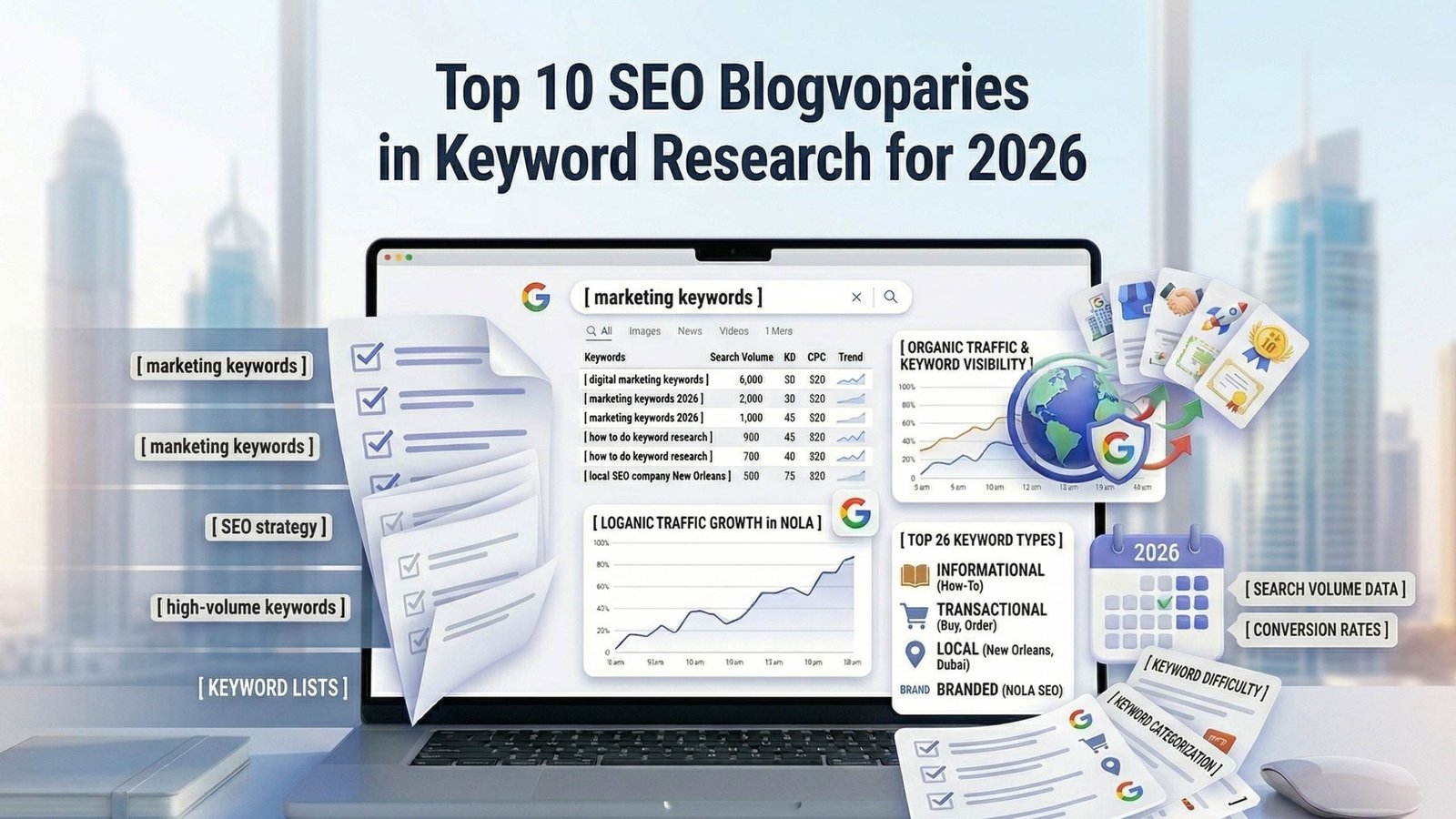
While writing this blog, we followed the research approach most professional marketers take, starting with Google, then cross-checking with AI tools like ChatGPT and Gemini to explore how many types of marketing keywords actually exist to boost an SEO strategy.
What we found was fascinating. Google’s top results showed 16 types of marketing keywords, while other sources claimed 27 types you must know for SEO success. AI Overview listed over 10 primary types, ChatGPT listed 6, and Gemini counted 8.
After all this digging, we at Odyssey Marketing SEO and the writers team realised it’s easy to get confused; there isn’t a single answer. The real challenge is figuring out which types of marketing keywords truly matter for improving SEO and driving results.
After adding these, your blog would cover 26 marketing keyword types, making it extremely comprehensive for marketers looking to plan SEO, PPC, content, and local strategies:
SEO Marketing Keyword Types
Marketing keywords are the backbone of search engine optimisation (SEO), pay-per-click (PPC) campaigns, and content marketing. They can be classified based on intent, specificity, and usage. Here we explain 20 different types of marketing keywords that can help grow your brand.
Marketing keywords connect your brand with people actively searching online, helping search engines understand your content and show it to the right audience at the right time. By tracking keyword performance, you can identify what drives traffic, engagement, and conversions.
Different keywords reflect different levels of user intent. For example, a search like “what is SEO” shows someone in learning mode, while “best SEO agency near me” or “buy SEO tools” signals strong intent to take action. The more precisely your content matches that intent, the better your results.
When you align your content with user needs and intent, you not only improve visibility but also drive stronger engagement, higher conversions, and sustainable SEO growth.
Effective keywords don’t just improve rankings, they drive qualified traffic, higher engagement, and measurable business results.
Once you stop viewing keywords as a technical chore and start seeing them as strategic signals, everything changes. They become a clear, practical way to lift visibility, reach the right audience, and turn search demand into real business results.
Understanding search intent is key to creating content that meets user expectations. By grouping keywords according to what users are trying to achieve, you can design a content strategy that aligns with every stage of the buyer journey.
These keywords target users in the awareness stage, looking for answers or knowledge. They often begin with “what,” “how,” “why,” or “tips for.”
Strategy: Use keyword research tools to identify trending queries, then create tutorials, guides, blog posts, or explainer videos. This approach drives traffic, builds credibility, and introduces your brand to new audiences.
Examples:
Navigational keywords indicate that users are looking for a specific brand, website, or page. These searches reflect intent to find a known destination.
Strategy: Ensure branded keywords point to the correct landing pages. Optimise titles, meta descriptions, and URLs so that search engines deliver precise results.
Examples:
Users searching with these keywords are in the research or comparison stage before making a purchase. They are evaluating options, reading reviews, and exploring alternatives.
Strategy: Create content that guides decision-making: buying guides, product comparisons, case studies, and review posts. These keywords are also valuable for refining paid search campaigns, as PPC data can reveal which terms convert best.
Examples:
Transactional keywords signal purchase intent—users are ready to take action. They often include words like “buy,” “order,” “subscribe,” or “book.”
Strategy: Direct these keywords to product pages or service landing pages. Add clear calls-to-action, pricing information, and structured data to improve visibility and click-through rates.
Examples:
Keywords differ not only in topic but also in length and specificity, and each type plays a unique role in search engine optimisation (SEO). Using a mix of short-tail, mid-tail, and long-tail keywords allows you to reach broad audiences while also targeting highly qualified, sales-ready traffic.
Short-tail keywords are broad, generic terms consisting of 1 to 3 words. They attract high search volume but come with intense competition and often unclear search intent.
Purpose:
Characteristics:
Examples:
Mid-tail keywords are more specific, usually containing two or three words. They balance reach with intent, attracting users who are exploring options but not yet ready to buy.
Purpose:
Characteristics:
Examples:
Long-tail keywords are highly specific phrases, typically three or more words. They capture clear search intent and bring lower search volume but higher conversion potential because users are closer to taking action.
Purpose:
Characteristics:
Examples:
Keywords can be categorised by brand association, helping you target audiences based on their familiarity, loyalty, or intent. Understanding these categories allows you to protect your brand, reach new customers, and optimise paid campaigns efficiently.
Branded keywords include your company or product name, signalling that the user is intentionally seeking your brand.
Purpose:
Examples:
Non-branded keywords don’t mention a specific brand. They target users exploring options or comparing solutions within your industry.
Purpose:
Examples:
Competitor keywords include other companies’ brand names. Targeting these searches lets you capture traffic from users evaluating alternatives.
Purpose:
Examples:
Negative keywords prevent your ads from showing up for irrelevant searches. They help reduce wasted spend and improve the efficiency of paid campaigns.
Purpose:
Examples:
Beyond search intent and keyword length, marketers rely on additional keyword types to refine targeting, expand reach, and balance organic and paid strategies. These categories help connect businesses to the right audience in the right context.
Market segment keywords describe a broad industry, product category, or sector. They attract users who are exploring a field but haven’t yet narrowed down to a specific brand.
Purpose:
Example: A sports retailer targeting “home exercise equipment” can attract shoppers interested in fitness products across different brands.
Customer-defining keywords focus on the characteristics of the audience behind the search, such as their profession, age, interests, or specific needs.
Purpose:
Example: “Accounting software for freelancers” targets independent professionals looking for tools tailored to their work style.
Product keywords reference a specific product or service. They attract users who know what they want and are often comparing options or providers.
Purpose:
Example: A skincare brand optimising for “hydrating face serum” directs shoppers straight to that product listing.
Geo-targeted keywords pair a product, service, or category with a specific location. They are essential for local marketing and location-specific campaigns.
Purpose:
Example: A restaurant targeting “best sushi in Austin” connects directly with local diners ready to visit or order.
Trending keywords spike due to viral topics or cultural events, while seasonal keywords see predictable rises during holidays or recurring events.
Purpose:
Examples:
Google Ads keywords determine how paid search campaigns appear. They are organised by match type, broad, phrase, and exact, which controls how closely a user’s search must align with your keywords.
Purpose:
Examples:
Not all keywords are about exact phrases; some are designed to give context or connect your business to a specific audience or location. These keywords help search engines understand your content better and ensure your brand reaches users in the right place at the right time. Using them improves both organic search relevance and local or targeted marketing campaigns.
LSI keywords are terms that are conceptually related or synonymous with your main keyword. They help search engines determine the context and relevance of your page, ensuring your content ranks accurately.
Purpose:
Examples:
Local keywords target searches tied to a specific geographic location. They are essential for businesses that serve particular cities, neighbourhoods, or regions.
Purpose:
Examples:
These keywords signal the specific purpose behind a search, combining intent with modifiers such as urgency, quality, or pricing. They help marketers match content or ads to precise user motivations.
Purpose:
Examples:
These keywords are phrased as questions, often starting with who, what, when, where, why, or how. They are valuable for content that educates or solves problems.
Purpose:
Examples:
These keywords highlight specific features, functions, or benefits of a product or service. They attract users comparing options or looking for detailed solutions.
Purpose:
Examples:
Keywords tied to events, conferences, launches, or webinars. They capture users searching for real-time or upcoming activities.
Purpose:
Examples:
These combine brand awareness with specific intent, such as exploring, comparing, or buying a particular brand’s product.
Purpose:
Examples:
These keywords include verbs or actions that indicate the user wants to perform a task immediately, such as download, book, try, or schedule.
Purpose:
Examples:
These focus on specific versions or models of a brand’s product, combining the brand name with variant details.
Purpose:
Examples:
Read Blog: Why Local SEO Maximises for Multi-Location Business Growth?
Keywords play a crucial role in both organic search and paid advertising. At Odyssey Marketing, we integrate research, competitor analysis, and performance tracking to help businesses leverage keywords effectively across channels.
Our keyword research approach identifies related terms, search volume, and estimated cost-per-click. This helps separate keywords suited for blog content from those that perform best in paid campaigns.
Examples by Industry
We monitor competitors who rank in organic search and invest in paid campaigns. Insights into share of voice, rankings, and keyword coverage reveal opportunities for your strategy.
For instance, if competitors dominate a broad term like “luxury car repair services”, targeting a more specific phrase such as “affordable car repair for hybrids” allows you to reach a defined audience with less competition.
Measuring how keywords perform in both SEO and PPC campaigns ensures your strategy adapts to real-world trends. You can identify which terms drive traffic, clicks, and conversions, and adjust campaigns accordingly.
For example, when “family lawyer near me” starts trending, a blog can capture organic search traffic, while allocating budget to the same keyword in ads can maximise lead generation.
Did you know that over 90% of keywords receive ten or fewer searches per month? While these low-volume phrases might seem insignificant, they often carry high intent, making them extremely valuable for both SEO and paid campaigns.
Targeting these hidden opportunities allows your business to capture traffic competitors overlook, while maximising ad spend efficiency and boosting organic visibility.
At Odyssey Marketing, we use a combination of research, analytics, and AI-powered insights to identify and optimise keywords across campaigns:
There are 10 main keys of digital marketing that you need to know, such as:
In short, digital marketing is about attracting, engaging, converting, and retaining customers through a strategic mix of these keys.
The Seven A’s of Marketing are a modern framework that expands on traditional marketing principles to focus on the customer journey and brand relationship. They are:
These “A’s” emphasise a customer-centric approach, highlighting engagement, action, and advocacy rather than just promotion.
For modern SEO, it is best to focus on one primary keyword and 3–5 secondary or LSI (Latent Semantic Indexing) keywords per page. Instead of “keyword stuffing,” search engines now reward “topical authority.” By using related terms and answering relevant questions, you help search engines understand the full context of your content.
Long-tail keywords are the “secret trick” for smaller brands because they have lower competition and higher conversion rates. While a broad term like “shoes” is dominated by giants like Nike, a long-tail phrase like "vegan waterproof running shoes for flat feet" allows a niche business to rank #1 and reach customers ready to buy that exact product.
Mastering the 26 types of marketing keywords is the first step toward building a high-performance digital presence. By moving beyond simple search terms and focusing on user intent, brands can bridge the gap between appearing in search results and driving meaningful customer actions.
Success lies in the strategic balance of broad, high-volume terms for visibility and specific, long-tail phrases for conversion. Whether optimising for organic growth or refining a paid campaign, understanding these categories ensures your content remains relevant to the right audience at exactly the right time.
Ultimately, keyword research is an ongoing process of adaptation. By consistently auditing performance and monitoring emerging search trends, you can maintain a competitive edge, improve your return on investment, and achieve sustainable growth in an ever-evolving search landscape.