
Affiliate Marketing Explained: How Regular People Are Turning Content Into Income
Somewhere between a blog post and a purchase, there’s a link that made someone money without them ever touching the product. That’s affiliate marketing in one sentence, and it’s quietly become one of the most accessible ways to earn online, whether you’re a writer, a video creator, or just someone with an audience that trusts your opinion.
This guide breaks down what affiliate marketing actually is, how the money moves, who’s involved, and the real steps to get started, without the fluff that usually fills these articles.
What Is Affiliate Marketing, Really
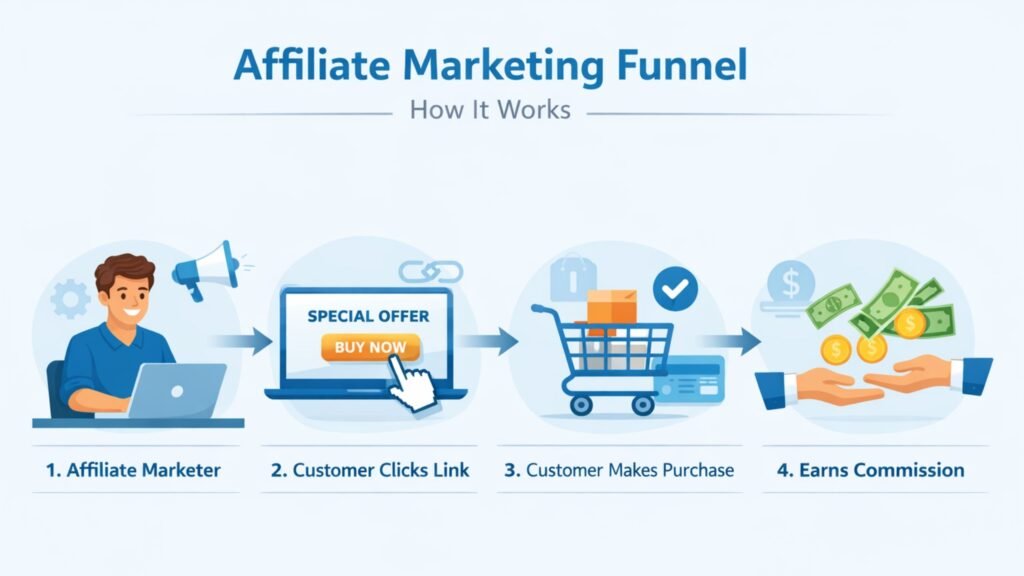
Affiliate marketing is a performance based partnership. A business (the merchant) gives someone with an audience (the affiliate) a unique link to promote its product. Every time that link leads to a sale, a lead, or sometimes just a click, the affiliate earns a commission.
No inventory. No customer service. No shipping headaches. The affiliate’s job is simply to connect the right audience with the right product, and get paid when that connection turns into business for the merchant.
Think of a fitness YouTuber recommending a protein brand in a video description. The brand gets exposure to an audience that already trusts the creator’s opinion on fitness products. The creator earns a cut of every sale that comes through their link. The viewer gets a product recommendation from someone they already follow instead of a random ad. Everyone walks away with something.
Who’s Actually Involved
Every affiliate marketing deal runs through four players, and understanding each one helps explain why this model works so well. The affiliate is the person promoting the product, usually through a blog, a YouTube channel, a podcast, or a social media page. The merchant is the business that owns the product and pays the commission.
The affiliate network sits in the middle in many cases, tracking clicks, managing payouts, and connecting affiliates with merchants they might not have found on their own. And the customer is the person who clicks the link and makes the purchase, whether they realize they’re part of an affiliate transaction or not.
Some affiliates work directly with merchants without a network involved, especially in smaller niches where a blogger and a brand find each other organically. A merchant who makes handmade candles might reach out to a home decor blogger directly rather than joining a large network. Both paths work. Networks just make discovery easier.
How Affiliates Actually Get Paid
Not every affiliate program pays the same way, and knowing the difference matters before you pick one to join.
- Pay per click programs pay a small commission every time someone clicks your affiliate link, regardless of whether they buy anything. It’s the lowest barrier to earning but usually pays the least per action.
- Pay per lead programs pay when someone completes a specific action after clicking your link, like filling out a form or signing up for a free trial. This model rewards affiliates who can drive qualified interest, not just traffic.
- Pay per sale is the most common structure and the one most people picture when they think of affiliate marketing. You earn a percentage of the sale, or a fixed amount, every time someone buys through your link. Amazon Associates, one of the largest affiliate programs in the world, runs on this model and pays affiliates up to 10 percent commission depending on the product category.
Is Affiliate Marketing Actually Right for You
Before jumping in, it helps to be honest about whether this model fits how you want to work. A few signs point clearly toward yes.
You want income tied to your own effort and interests rather than a fixed paycheck. You enjoy creating content and building an audience around topics you actually care about. You’d rather partner with brands you genuinely like than push whatever pays the most. And you’re comfortable with the entrepreneurial side of things, meaning slow starts, inconsistent early income, and learning as you go.
If none of that sounds appealing, affiliate marketing will feel like a grind rather than a career. If it does sound appealing, the upside is real. It just takes longer to show up than most people expect.
What Can You Actually Earn
Affiliate income varies enormously because it’s tied directly to performance rather than hours worked. Someone with 500 email subscribers and someone with 500,000 will earn very different amounts from the exact same program.
Career data sites report average affiliate marketing salaries ranging from around 56,000 to 82,000 dollars a year in the United States, though these figures include a wide mix of part time hobbyists and full time professionals. So, they should be read as a rough range rather than a guarantee.
What’s consistent across almost every successful affiliate is that early months rarely reflect long term potential. Growth tends to compound as content builds up and trust with an audience deepens.
How to Start Affiliate Marketing: A Real Step by Step Path
1. Choose a Niche You can Commit To
The best niche sits at the overlap between something you’re genuinely interested in and something enough people are searching for. Use tools like Google Trends to check demand before committing months of work to a topic. Ask yourself what products you already use and would happily recommend, and where you could bring a fresh angle to a space that already has competition.
2. Pick the Right Channel for that Niche
A dedicated review website works well for product heavy niches. A blog woven around a broader topic, with affiliate links added naturally, suits content creators who write regularly. Social platforms like Instagram or YouTube fit visually driven niches where seeing a product in action matters more than reading about it. Many successful affiliates end up using more than one channel once the first one gains traction.
3. Join an Affiliate Network or Program
Networks like Awin, ClickBank, Rakuten Advertising, and Amazon Associates connect you with merchants actively looking for affiliates. Program specific options exist too, from Etsy Affiliates to the eBay Partner Network, depending on what you’re promoting. Research a few options against your niche before committing, since commission structures and payout minimums vary widely.
4. Grow Your Reach with More than One Strategy
Relying on a single traffic source is risky. A mix of SEO focused content, consistent social media posting, and an email list gives you multiple paths for readers to find you, and protects your income if one channel slows down. Odyssey Marketing works with creators and businesses building exactly this kind of multi-channel presence, where content, search visibility, and audience growth reinforce each other instead of competing for attention.
5. Build the Skills that Actually Move the Needle
Strong writing keeps readers engaged long enough to click through. Basic data analysis helps you understand which content and which products actually convert. Comfort with a camera or a microphone opens up video and audio formats. None of these need to be mastered overnight, but each one compounds the effectiveness of everything else you’re doing.
Tips That Actually Make a Difference
A few habits separate affiliates who build something lasting from those who burn out after a few months.
Study what’s working in your niche rather than guessing. Look at which content formats, offers, and calls to action other successful affiliates are using, and adapt the approach to your own voice instead of copying it outright.
Understand what you’re actually being offered before joining a program. Commission rates matter, but so do cookie duration, payout thresholds, and whether the merchant offers bonuses for top performers. Ask these questions upfront rather than discovering the details after months of work.
Use your affiliate dashboard properly. Most programs give you a dashboard showing clicks, conversions, and earnings in real time. Checking it regularly tells you what content is actually driving results, so you can do more of what works and drop what isn’t.
Treat relationships as the real asset. Your audience’s trust is what makes any of this work in the first place, and the brands you partner with are more likely to offer better terms to affiliates who communicate well and represent products accurately. Protect both relationships the same way you’d protect any other part of your business.
Getting Started the Smart Way
Affiliate marketing rewards patience and consistency more than any single tactic. The people who succeed at it usually aren’t the ones chasing every trending product, they’re the ones who picked a niche, stuck with it, and built genuine trust with an audience over time. That trust is what turns a simple link into real income.
If you’re building a content platform, a niche website, or a social presence and want the visibility and structure to support real affiliate income, Odyssey Marketing helps businesses and creators strengthen the SEO, content, and design foundations that make audience growth sustainable. A strong platform makes every affiliate link you place work harder for you.
Ready to build a platform that actually supports your affiliate marketing goals? Odyssey Marketing works with creators and businesses to strengthen the SEO, content, and site foundations that turn casual readers into a loyal, returning audience. Get in touch with our team today to talk through where your current setup stands and what it would take to grow it properly.